
Path of the Idle Cultivator Walk the Sword Origin
Proficiency, intent, cut spirit, and bloodlines that refuse luck-only farming.
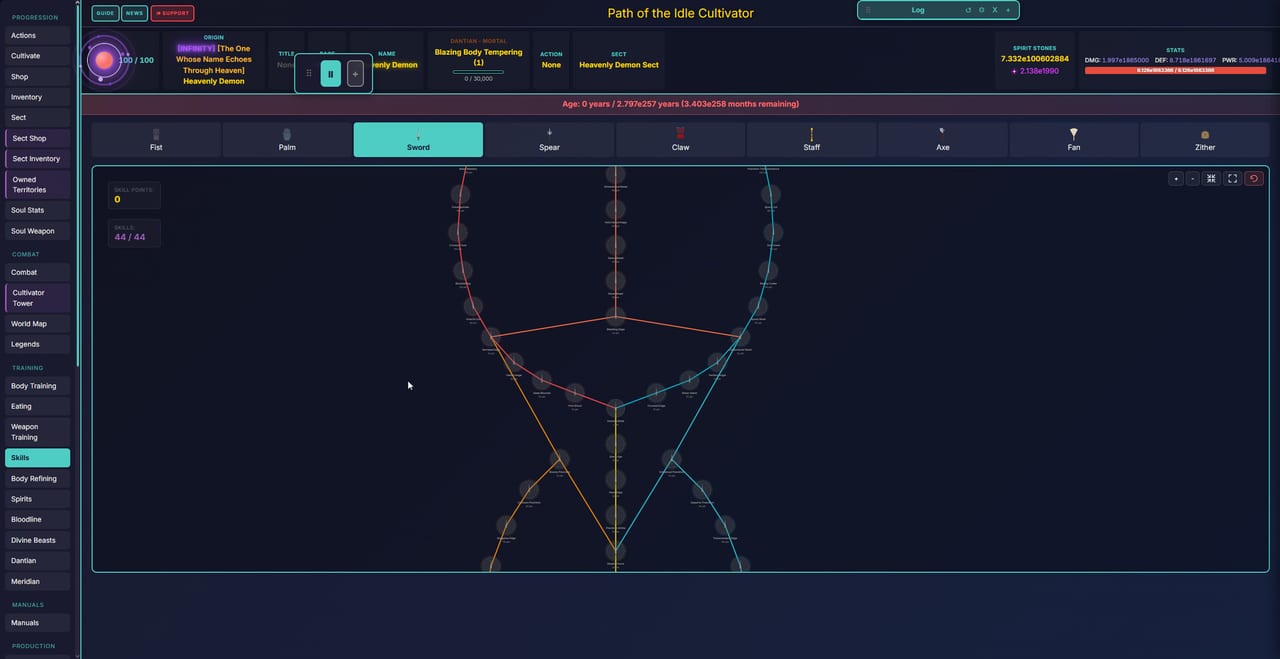
Sword is the combat origin in Path of the Idle Cultivator: deep origin quests, a weapon tree that actually wants to be trained, and bloodlines that ignore you until proficiency and talent line up. Steam Early Access opened 5 Sep 2026 (app 5007580, free to play). The game is single-player, English, Wuxia Dev / Wuxia Games, with itch.io and Android builds beside Steam.
If you want a first specialist life after Common, take Sword. The origins tier list puts it in S for combat alignment, not because someone invented a damage formula. The loop is sit, fight, train the blade, spend talent while the blade is in your hand, then filter the bloodline canvas for sword nodes.
Origin quests
Sword origin quests are the long spine. Wuxia Dev has used this origin as the template for “in-depth refining” — other origins (spear, palm, fan, staff, axe) got similar passes in v0.3.5, and sword itself only took minor changes there. That means the quests are not a tutorial pop-up; they are the reason the origin exists. Finish them. They teach proficiency, intent, and the combat habits the tribulation screen will test in fifty turns.
Do not treat quests as optional flavor. Fan players who skipped the Fan questline could not fuse nodes. Heaven Chosen players who skipped the heaven battle could not open Breakthrough. Sword is the same kind of design: the quests are the skill tree’s permission slip.
Proficiency and talent
Proficiency is the gate people trip over. A public comment from the developer: sword bloodlines need strong enough sword proficiency, and you should pick up talent while training weapon proficiency. A player with 2,150 sword proficiency and sword intent at “absolute infinite 36” still asked where talent was. Talent is not luck. Luck in the hundreds of millions will not print sword bloodlines if the training loop never awarded talent.
Practical version: put the sword in the training slot, use a trainer (flat exp) and a partner (multiplier) if your sect can spare them, and do not swap to claw for a thousand years because a beast looked shiny. The bloodline canvas can filter by weapon. Filter sword. Spend points on sword-shaped nodes. Weapon skill buffs live on bloodlines now; the old strength bloodline is gone.
Sword intent, aura, cut spirit
Intent is the comprehension track. It climbs while you fight and train; it is not a shop item you click once. Aura used to have nine steps. That ladder was removed in v0.3.2; sword aura now gets the cut spirit. Build around cut spirit, not around a nine-rank aura checklist from an old screenshot.
Combat in this game is still a tab plus a world map. The combat tab is the early stair. The map is where bosses live, get stronger over time, and drop manuals, body treasures, and flying-treasure materials. Sword origin wants both. Sitting only on Cultivate will not finish a sword life.
Bloodline canvas
Bloodlines are a free-form tree you assemble. Nodes, branches, weapon filters. Divine Beasts (Snow Crane, Venom Serpent, Azure Dragon, Thunder Tiger, Starborn Tortoise, Ethereal Serpent) feed parts and eggs if you hunt or befriend them. Sword origin does not ban beasts; it just does not replace sword proficiency with a crane. Use beasts as a side income, not as an excuse to never train the blade.
Soul weapons persist across lives. Mundane inventory does not, unless you stored it as a heirloom or in free storage. If your “perfect sword” is not in the vault, it dies with you. That is the rebirth rule, not a sword-specific curse.
How a sword life should feel
Hour one: learn the UI, keep a Common-like sitting habit, start sword training immediately. Day one: origin quests, first tribulations, manuals that say sword. Later: intent climbing, cut spirit online, bloodline filter locked to sword, talent still coming in from training — not from a luck potion fantasy.
Compare yourself to other origins only with the right metric. Fist will look slower on Qi. Demonic will look greedier on essence. Heaven Chosen will look stuck if they have not battled heaven. Sword should look like a pile of fights that actually paid proficiency. If your log is a million years of meditation and a still-empty sword filter, you are playing Common in a sword hat.
Alchemy and forge still matter. Pills, weapon enchantments, reforge, divine forge, shared sect inventory — the blade is not only a skill tree. When a sword plateaus, check the furnace before you reroll the origin. The origins hub lists every life if you decide the hat was wrong; the weapons tier list is the tree ranking if you want to stay sword-handed on a different origin.
Sword is not a personality. It is a training contract. Sign it, keep talent flowing, and let the cut spirit do the talking in the fifty-turn duel. Anything else is tourism with a sharper tooltip.
Frequently Asked Questions
Quick answers to the most common questions.
Why am I not getting sword bloodlines?
Raise sword proficiency and gain talent while training the weapon. Luck stacking is not enough. Filter the bloodline canvas for sword nodes after that.
What happened to the nine sword aura steps?
Removed in v0.3.2. Sword aura now gets the cut spirit. Ignore old nine-step guides.
Is Sword good for a first life?
Yes, if you will actually fight and train. If you only want to learn the UI, Common is gentler. Sword is the combat default on the origins tier list.
Do I have to be Sword origin to use the sword tree?
No. Any origin can train sword. The origin quests and the cleanest bloodline loop still belong to Sword origin.
Does sword gear persist on rebirth?
Soul weapons and stored heirlooms can. Normal inventory resets. Vault the blade you care about.
Where should I go after this page?
Back to the origins hub for the roster, or the weapons tier list if you are comparing trees instead of lives.